Look Up: The Great Saudi Stargazing Revival
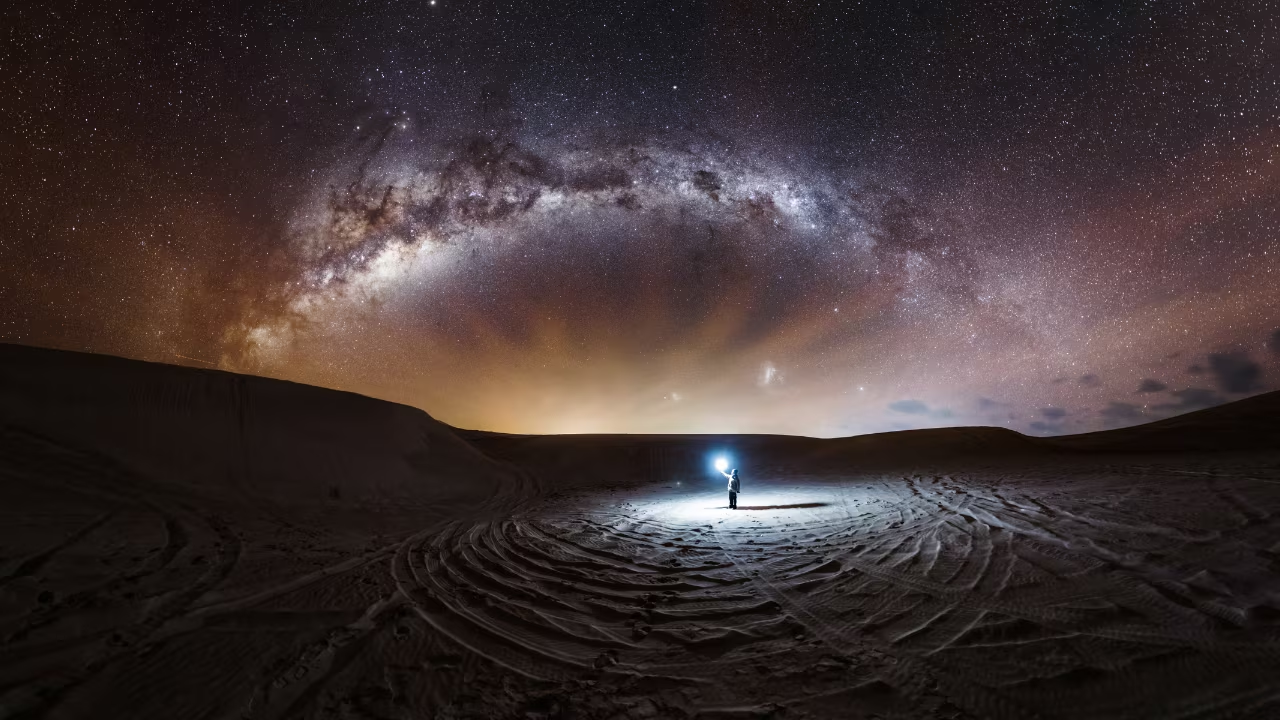
For as long as people have searched the skies for stories, the desert nights and mountain peaks of Saudi Arabia have been the perfect stage. Today, as more people seek a break from bright lights and constant motion, stargazing—surrounded by silence, nature, and open skies—is still a living tradition in the Kingdom, experienced through stories, astronomy, and an appreciation of our history. So, whether you’re watching from your rooftop or heading out to your favorite spot, there’s a deep heritage—and a cool bit of science—behind stargazing in Saudi Arabia that makes the whole experience all the more meaningful.
Ancient fascinations
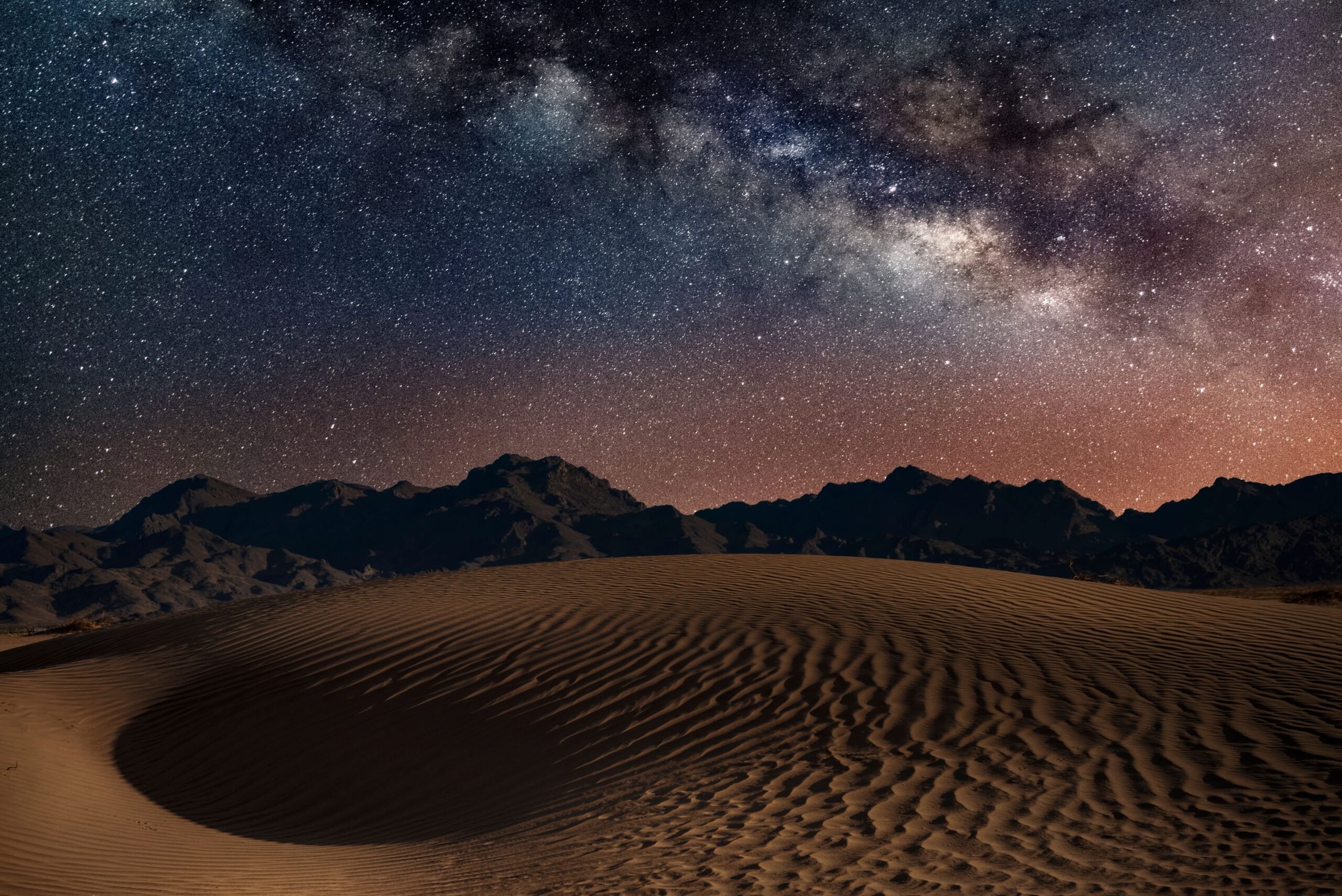
The Saudi desert has always been one of the best places to look up, thanks to its clear weather and almost no artificial light, it’s like a natural observatory. For centuries, Bedouin navigators relied on a trio of stars to locate true north, sharing this knowledge across generations in the stories they told. Like the tale of the red supergiant Aldebaran (Arabic for “the Follower”) who fell in love with Ath-Thurayya (aka, the Pleiades), while al-‘Ayyuq (“the Impeder” Auriga), always came between them. So, when a traveler looked to the sky, that tale would almost literally play out above them as these stars crossed the sky.
Did you know more than 200 of the brightest stars still have Arabic names in the English language? There’s Fomalhaut (the whale’s mouth), Deneb (bird tail), Achernar (the river’s end), and even Betelgeuse (hand of Orion) – it’s a legacy that’s still shining bright.
Dark skies, bright stars
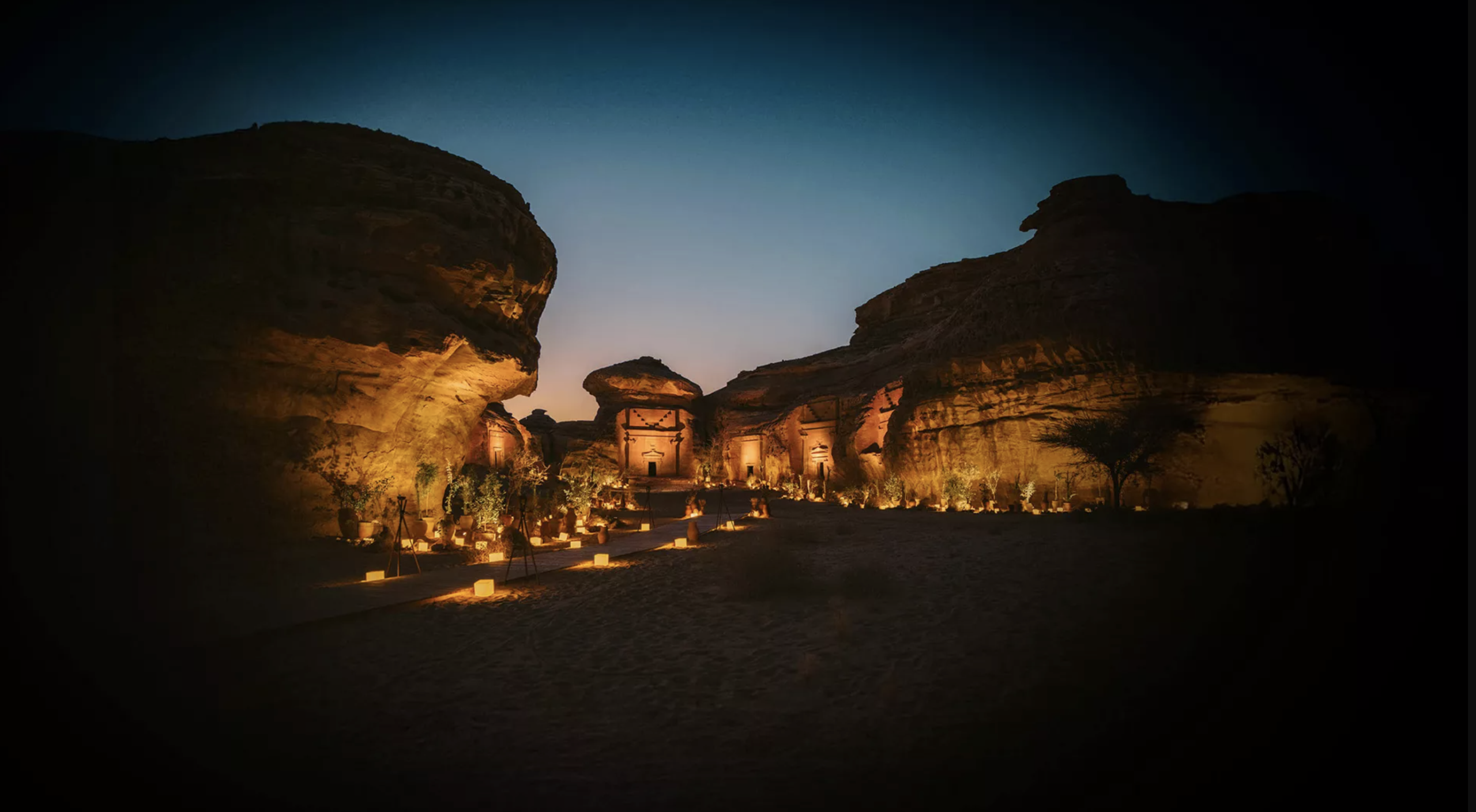
Fast-forward to the present, Saudi Arabia is actively protecting these natural observatories. AlManara and AlGharameel Nature Reserves have now been officially designated as the region’s first International Dark Sky Parks, and the Royal Commission for AlUla with the AlUla Skies Festival.
These parks will evolve into hubs where you can join in community classes, conduct astronomy research, and dive into immersive celestial experiences—all while preserving the pristine night skies that once guided ancient travelers and inspired storytellers.
Stargazing in style
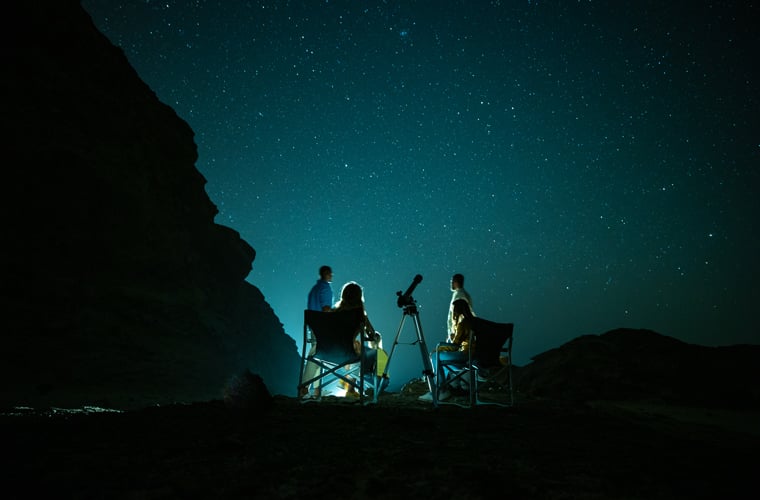
If you want to experience this cosmic magic guided stargazing tours offer telescope views of Saturn’s rings, colorful nebulae, and the glowing Milky Way stretching overhead. Many experiences include campfires, dinner under the stars, and storytelling that connects the rock formations, constellations, and history that surrounds you.
The annual AlUla Skies Festival is a highlight—transforming the sandstone desert into a living planetarium with moonlit hikes, meteor shower meetups, pop-up observatories, and even hot-air balloon flights lifting you above the glowing formations.
But AlUla isn’t the only game in town. Other parts of Saudi Arabia are also embracing the night sky and offering stunning skies in different climates. In the mountainous Aseer region, the Adventure Hub in Al-Dalghan Park offers guided night-sky observations alongside mountain biking trails, safaris routes, glamping, and hiking (like some kind of star… trek). Meanwhile, along the Red Sea coast, where sea breeze meets dark horizon, the region is merging as Saudi’s next dark sky hotspot, with astronomy walks, telescope rentals, and full-moon hikes led by expert teams.
Go wish upon a star
Put all of this together, and stargazing in Saudi Arabia becomes more than a night out, it’s a journey across time. A chance to stand where ancient travelers once stood, look up at the same sky carved into their stories, and feel that same spark of wonder.
With Dark Sky Parks on the rise, festivals lighting up the desert (figuratively, of course!), and new experiences across mountains and coastlines, the Kingdom is being rediscovered as one of the best places on Earth to pause, breath, and look up.